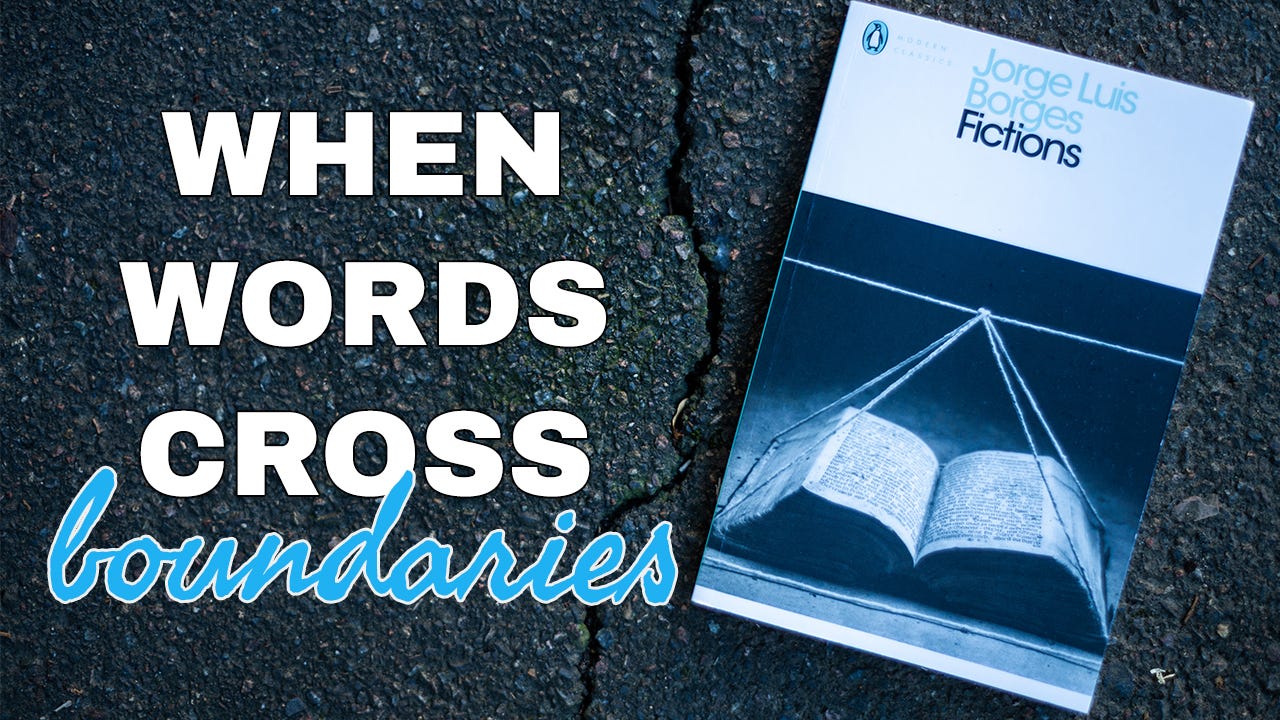
When Words Cross Boundaries: On Adjectives, Verbs, and the Themes They Unearth
Properly used, adjectives can be conceptual tools that shift the mood of a scene. Let's analyse three concise, precise sentences to understand unusual adjective-noun pairings.

One single well-placed word—an adjective, a verb, an adverb—can completely shift the tonal mood of a sentence, enabling a myriad of implications and meanings beyond what is written, and into what is left unsaid.
Therefore, today I want to discuss three examples of adjective-noun and noun-verb pairings that are fairly uncommon—meaning, that are not typically used together.
These three cases involve borrowing adjectives we associate with living things and applying them to inanimate objects, creating unexpected textures that startle the reader into seeing familiar things differently. This technique is particularly helpful when aiming for a concise prose that still builds an eerie or otherworldly feel.
In particular, the three cases we’ll analyse are taken from Jorge Luis Borges’ famous Fictions1; specifically, three of his most renown short-stories. As usual, I will show you the excerpt, highlight the unusual adjective-noun or noun-verb pair, discuss why it is so, and its effect—both thematically and within the story.
Ready? Let’s get these sentences undone.