The Anatomy of Paragraph Breaks (Part 1): Structural Rules & Story Beats
Paragraphs are one of the fundamental structures of a story. This is the first part of a two-volume essay discussing guidelines for splitting paragraphs, considering structure-driven rules.

PART I (Basics) - HERE! | PART II (Pacing) | PART III (Meaning)
Paragraphs are one of the fundamental structures of a story—and, more often than not, they are invisible to the reader. Just a full stop and a new line, perhaps chosen by some half-remembered grammar rule readers don’t need to perceive.
Yet often, paragraphing isn’t just about order. Sometimes it’s about meaning.
In literary fiction, paragraphs can become a way of showing things the narrator would otherwise have to spell out: the state of mind of a character, the adrenaline of a situation, how fast—or slow—things move in a story. They can mimic the structure of human thought, or layer tension and horror depending on how they’re used.
In those cases, a writer might split the text in a way that feels unconventional or unexpected—not because the rules demand it, but because the story does. Yet to understand the unconventional nuances of paragraph-splitting, we first need to elaborate on the more traditional, structural-based reasons for doing so.
Therefore, today’s essay is the first part of three discussing different ways of breaking a story into paragraphs:
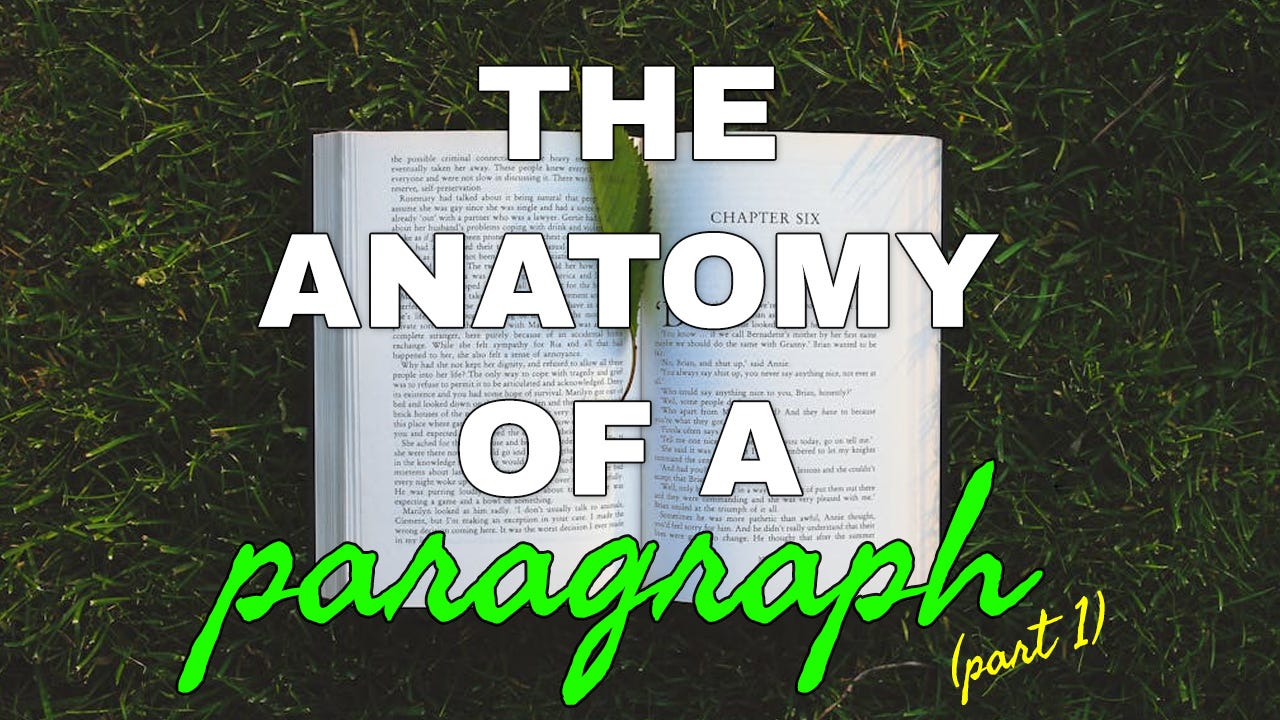
In Part 1 (today’s post) we’ll be discussing guidelines based on story structure. This includes three specific cases, and some variants.
In Parts 2 & 3 (next two weeks) I’ll present guidelines based on meaning, voice, and pacing.
For all of the cases we’ll discuss today, I will present example excerpts from different books so you can see this in action. Today’s examples include Jeff VanderMeer, Ray Bradbury, Steven Erikson, and China Miéville.
Although this is written from a craft perspective and with writers in mind, what follows is just as valuable for critical readers. Once you start noticing why paragraphs break where they do, you begin to see how much of a story’s thinking happens not just in sentences—but in everything around them.
Guidelines Set #1: Paragraphing Based on Story Structure
The most commonly taught guidelines for breaking paragraphs are based on the structure of the story itself. They respond to changes in who is speaking, what action is taking place, where attention moves, or where characters go.
This kind of paragraphing aims to reduce ambiguity, introduce pauses in the reading (especially noticeable when read aloud), and add legibility—three things that help the reader orient themselves in a scene.
I will present three basic guidelines:
Dialogue-driven paragraphing, including interruptions, overlaps, and power-shifts.
Beats of physical actions—such as entrances, departures, or meaningful gestures.
Changes of topic or focus, including how to break a paragraph when the attention shifts. This could be in time (namely, flashbacks), from themes (same character, making a mental narration and changing topic), or between characters.