The Anatomy of Paragraph Breaks (Part 3): Enhancing Meaning
Paragraphs are one of the most important tools in storytelling—and used well, they can layer meaning and reveal thought-patterns. This is Part 3, of my essays on paragraphing.

PART I (Basics) | PART II (Pacing) - HERE! | PART III (Meaning)
Paragraphs are one of the most important tools in storytelling. They structure the narrative, but can also enhance or smother pacing. They add meaning to the words in the page, and layer alongside the voice to immerse the reader and let them experience the events alongside the narrator.
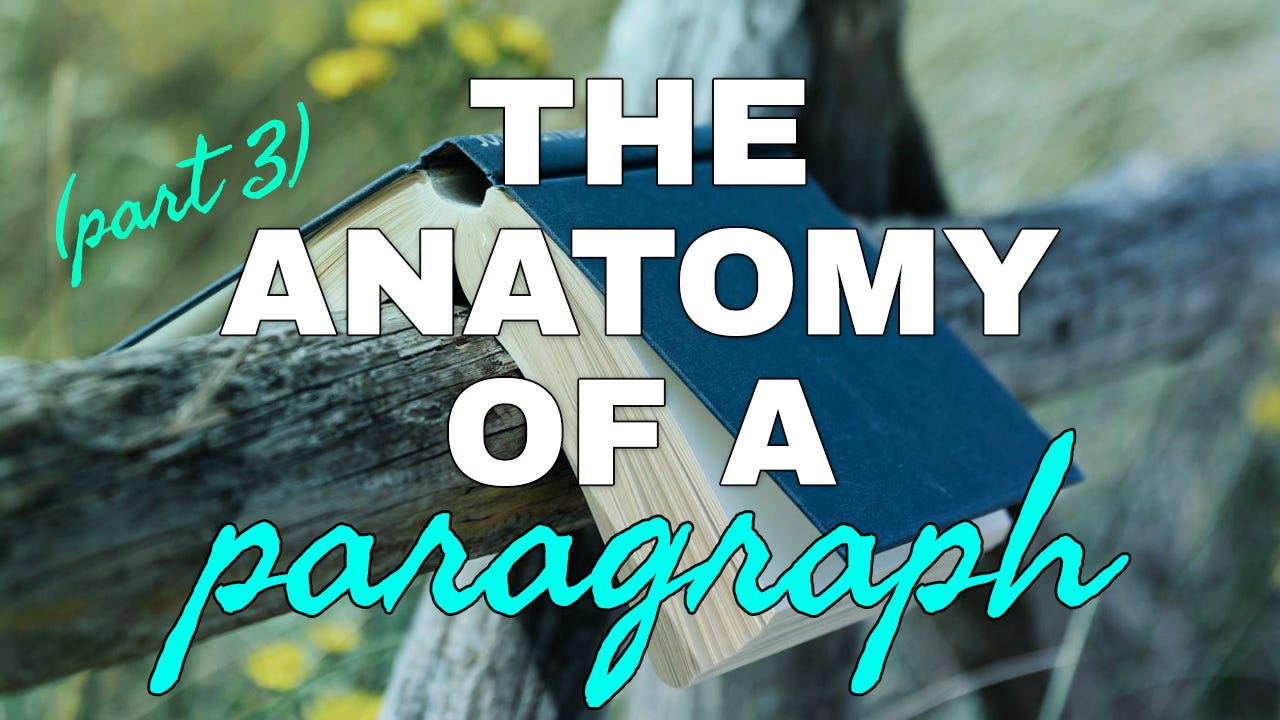
Yet some of those uses of paragraphs requires us to break the most commonly shared guidelines for paragraphing—the structure-driven rules we explored in Part 1. These basic principles help us split the story by dialogue (verbal or not), beats (physical movement) and theme (the story’s focus), but may not be enough in certain cases.
That is why, in Part 2, we explored a few rule-breaking approaches to enhance voice and pacing. Today, in the last Part of this series of essays, we’re focusing on less dramatic approaches to deepen and layer meaning.
As before, all the cases will have example excerpts from renown books, analysed in detail. Today’s examples include Iain Banks, Philip K. Dick, Daniel Keyes, and Steven Erikson.
Although this discussion is geared toward writers, critical readers will find it just as valuable. Once you start noticing how paragraphing can steer the reading experience, you realise that much of a story’s thinking happens not just in sentences, but in everything around them.
Guidelines Set #3: Paragraphing to Enhance Meaning
As we saw before, the most commonly taught guidelines for breaking paragraphs were based on the structure of the story itself, and responded to changes in who is speaking, what action is taking place, and where attention (or characters) go. Used well, these produced a structurally sound narrative—one we later learnt to control or disrupt, based on the mental states of a limited narrator.
But what happens when the narrator is not limited? Or when they are, but their mental state is neutral and focused… or invaded?
This is what we are considering today: a style of paragraphing based on value, narrative or reader focus, and temporal connection. These do not necessarily override the usual guidelines for splitting paragraphs, but instead apply them to an extreme.