Disrupted, Reconstructed: Playing with Ergodic Fiction
Alfred Bester’s The Demolished Man is an experiment in how form shapes experience and thought. This piece explores how the page itself sometimes becomes part of the narrative.

What if the text formatting, its placement on a page, and the shape it text could add meaning to a story? What if, through that artistic slip, we could change how a reader engages with a story?
In this essay, I explore some of the tricks done by Alfred Bester in The Demolished Man, the first Hugo Award winning novel (granted in 1953). We’ll dive into some examples of unique text formatting, its meaning and impact in the story, what ergodic literature is, and some tips-and-tricks to consider.
Let’s get this book undone.
The Case: Non-Linear Formatting
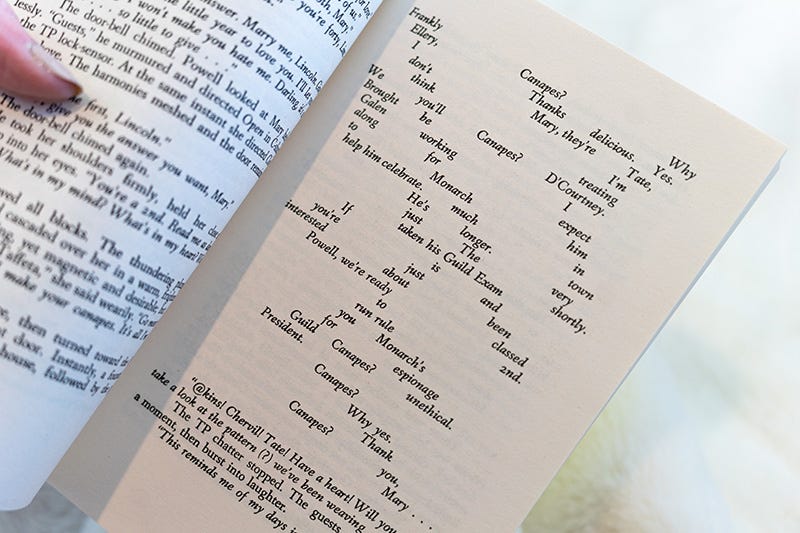
Alfred Bester wrote in quite a unique way, using typography and text placement on the paper to add meaning to the narrative. Let’s analyse the impact and meaning of the following text pattern (taken from The Demolished Man):
Heads up! I recommend that you read the text in the photo in order to better follow the analysis below.